Commissioning start-up
Pre-harvest walkthrough of bin aeration fans, dryer flame checks, safety cables and moisture sensor calibration before the first wet load.
- Moisture target sheet for operators
- Unload path verification
- Dealer sign-off checklist
Field service & parts
Commissioning checklists, spare-parts response windows and seasonal inspections designed around dryer runtime and bin aeration—not generic maintenance slogans.
Talk to service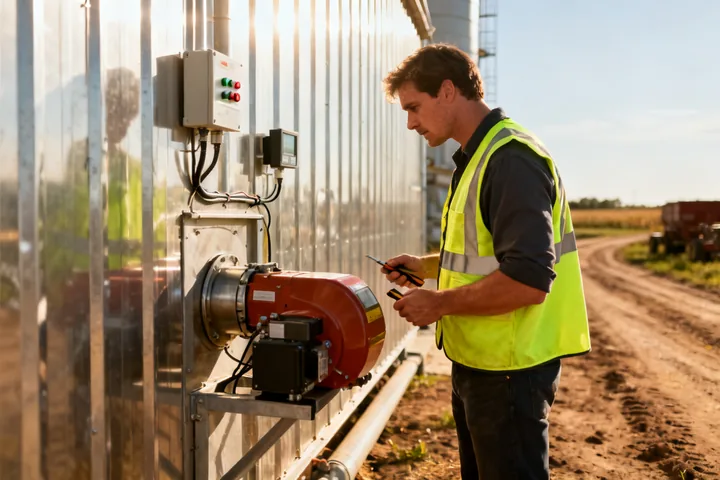
Choose the coverage level that matches your harvest risk: first-fill commissioning, peak-season parts, or full uptime windows.
Pre-harvest walkthrough of bin aeration fans, dryer flame checks, safety cables and moisture sensor calibration before the first wet load.
Pre-positioned sensors, belts, burner nozzles and unload motors for sites that cannot wait on overnight freight during wet weeks.
Post-harvest inspection of plenum wear, grain quality samples and aeration performance before spring fill contracts begin.
Every engagement starts with a short operating brief: crop mix, expected wet bushels per day, dryer model, and the moisture ticket history that is already costing margin. From that brief we build a commissioning sequence that dealers can execute without inventing steps on site.
Technicians verify aeration fan rotation, pressure switches, grain column sensors and burner interlocks before any wet corn or soy enters the system. Operators receive a one-page moisture worksheet listing inlet samples, plenum temperature bands and discharge Moisture Target near 14% for commercial corn programs. When seed lots are involved, we tighten temperature ceilings and sampling frequency so germination risk stays visible. Limitation: service windows cannot compensate for undersized wet holding—if combine dump rates exceed bin buffer, trucks still queue regardless of dryer brand.
Service deliverables are written for people who staff harvest nights: annotated photos of wear points, a prioritized parts kit, and a calendar for mid-season inspections when continuous-flow dryers accumulate hours fastest. If a site expands bin capacity mid-year, we re-check unload path balance so new rings do not starve or flood the dryer.
Procurement teams also get a clear boundary between warranty parts and recommended operational spares. That separation keeps RFQs honest and prevents harvest week surprises when a moisture probe or unload motor fails after hours.
Response targets assume an active Field Service Plan and stocked regional hubs. Remote sites may add transit days.
| Part class | Peak harvest | Off-season | Typical examples |
|---|---|---|---|
| Critical dryer controls | 48 hours | 5 business days | Moisture sensors, burner controllers |
| Mechanical wear parts | 72 hours | 7 business days | Belts, bearings, unload chains |
| Structural & sheet goods | Quote in 3 days | Quote in 5 days | Bin sheets, roof panels, catwalk sections |
Tell us your dryer model, bin count and harvest start date. We will propose a service window and kit list your dealer can execute.